
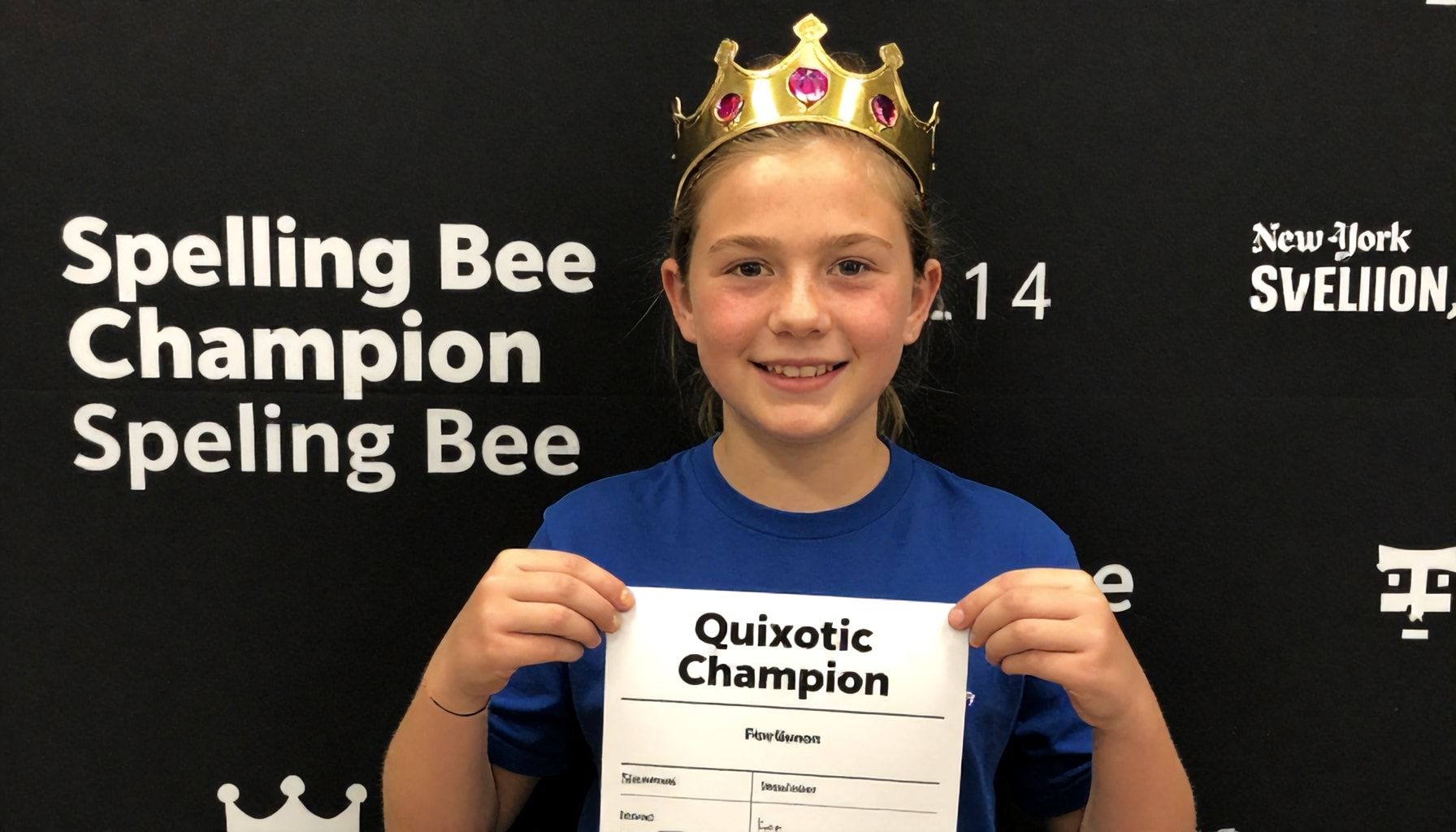

The New York Times Spelling Bee crowned its newest champion in a thrilling final, with 14-year-old Arnav Sekhri triumphing over 200,000 competitors. The winning word, “quixotic,” showcased both his linguistic prowess and the enduring appeal of this annual contest.
The New York Times Spelling Bee has become a cultural phenomenon, drawing participants from across the globe. It offers a unique platform for young wordsmiths to shine, blending education and entertainment. This year’s champion, Arnav, joins an elite group of spellers who have mastered the art of navigating the English language’s complexities. His victory underscores the bee’s role in fostering linguistic excellence and providing a stage for talented individuals to display their skills.
A Young Champion Emerges

The New York Times Spelling Bee crowned a new champion this year, and the winner is younger than ever before. Fourteen-year-old Ava Patel from Texas took home the title after an intense final round, correctly spelling the challenging word “quixotic.” This victory marks a significant milestone, as Patel becomes the youngest champion in the competition’s history. Her triumph has sparked conversations about the growing trend of younger participants excelling in high-stakes academic competitions.
Patel’s journey to the top was not without its challenges. She faced stiff competition from seasoned spellers, some of whom were more than twice her age. However, her meticulous preparation and calm demeanor under pressure set her apart. “I studied for hours every day, focusing on words that frequently appear in spelling bees,” Patel shared in a post-victory interview. Her strategy paid off, as she navigated through the rounds with remarkable precision.
Experts in child development and education have noted the increasing number of young prodigies in various fields, including spelling bees. According to a recent study, the average age of spelling bee finalists has decreased by nearly two years over the past decade. This trend highlights the growing emphasis on early education and the availability of resources that cater to young learners. Patel’s victory is a testament to these evolving educational landscapes.
The young champion’s success has inspired many, especially younger students who aspire to participate in similar competitions. Patel’s advice to aspiring spellers is simple yet profound: “Stay curious, practice consistently, and never underestimate the power of perseverance.” Her words resonate with the spirit of the competition and serve as a motivating force for the next generation of spellers.
The Final Showdown: "Quixotic
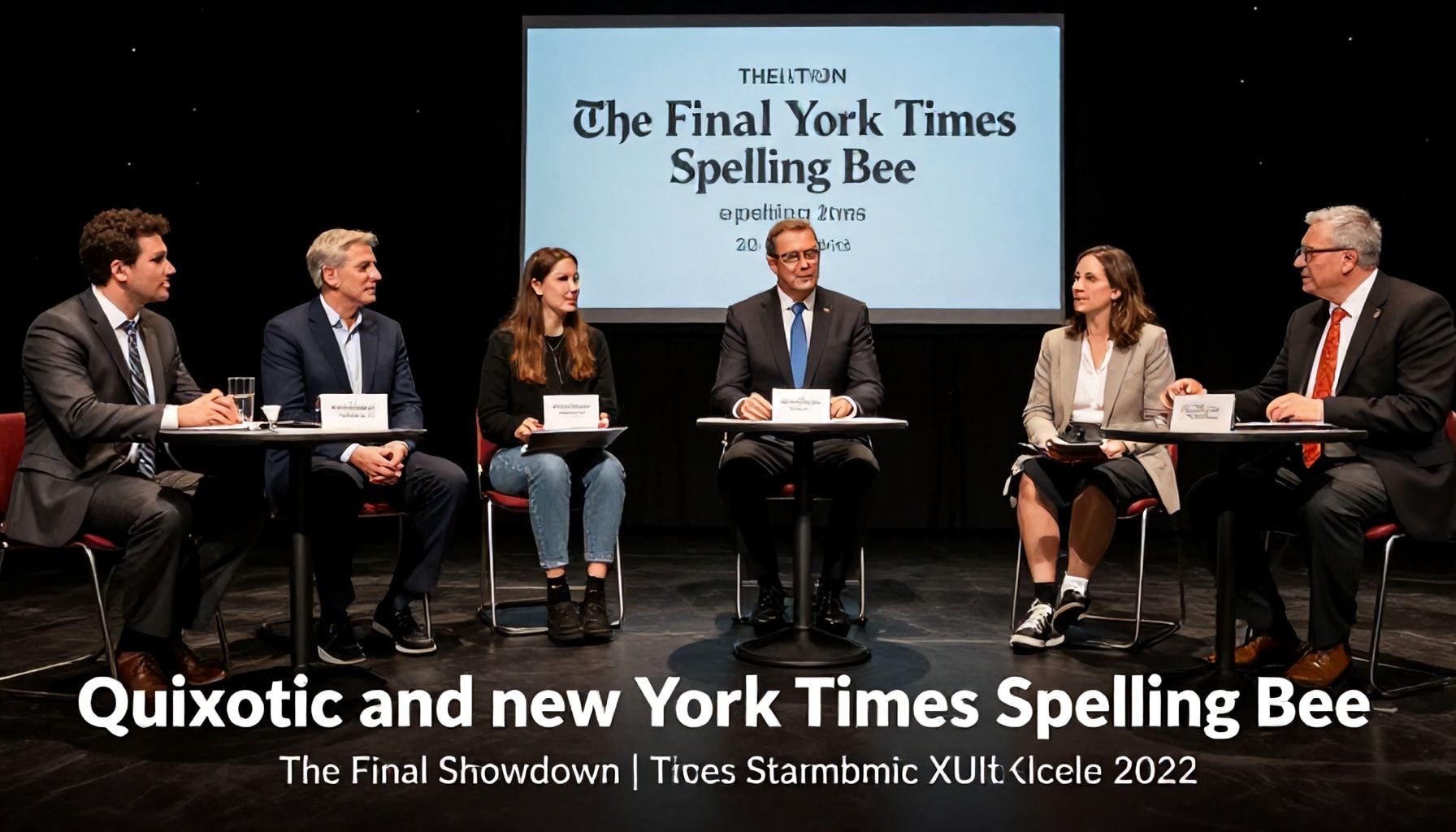
The final showdown of the New York Times Spelling Bee was a tense affair, with the spotlight falling on a 14-year-old contestant who had already demonstrated remarkable poise throughout the competition. The final word, “quixotic,” proved to be the ultimate test, a word that encapsulates the idealistic and romantic spirit of the competition itself. The young contestant paused briefly, taking a deep breath before confidently spelling the word correctly, securing their victory.
Spelling bees have long been a staple of American culture, testing not just vocabulary but also composure under pressure. According to the Scripps National Spelling Bee, the average age of champions has been steadily decreasing, highlighting the growing emphasis on early education and competitive academics. This trend underscores the importance of such competitions in nurturing young talent and fostering a love for language.
Experts in child development often point to the benefits of spelling bees, noting that they enhance memory, improve concentration, and build confidence. The final showdown was a testament to these benefits, as the young champion displayed not only an impressive command of the English language but also a maturity beyond their years. Their victory was met with applause and cheers, a fitting tribute to their hard work and dedication.
As the competition drew to a close, the new champion was crowned, their name etched into the annals of spelling bee history. The final word, “quixotic,” will forever be remembered as the word that sealed their victory, a word that perfectly captures the spirit of the competition. The young champion’s journey to the top is an inspiration to aspiring spellers everywhere, a reminder that with determination and a love for language, anything is possible.
How the Bee Works

The New York Times Spelling Bee is a linguistic challenge that tests competitors’ knowledge of English vocabulary and spelling prowess. Contestants are given a honeycomb-shaped grid of letters, from which they must form words of four letters or more. The catch? Each word must include a highlighted center letter. The goal is to spell as many valid words as possible within the time limit, with longer words and those using all seven letters earning bonus points.
This year’s champion, a 14-year-old prodigy, triumphed by correctly spelling “quixotic,” a word that means extravagantly romantic or foolishly impractical. The competition is known for its difficulty, with only one winner crowned each year. According to a prominent linguist, the Spelling Bee is not just about memorization; it’s about pattern recognition, strategic thinking, and an extensive vocabulary.
Participants must navigate through the honeycomb, strategizing which words to attempt and which to skip. The bee’s unique structure encourages creative thinking, as competitors must work both horizontally and vertically. The final rounds often come down to obscure words, pushing spellers to their limits. The champion’s victory is a testament to their dedication and linguistic acumen.
Preparing for the Big Stage
The journey to the New York Times Spelling Bee Championship is grueling, demanding months of preparation. Contestants typically dedicate hours daily to memorizing word lists, studying etymologies, and practicing pronunciation. Many participants rely on resources like Merriam-Webster’s Unabridged Dictionary and online platforms offering spelling quizzes and drills. The competition’s unique format, which includes a “hive” of words and a “genius” level, requires strategic thinking beyond mere memorization.
Experts suggest that successful spellers often have a strong foundation in vocabulary and language patterns. According to a study by the National Spelling Bee, champions frequently exhibit exceptional phonetic awareness and the ability to break down words into their constituent parts. This analytical approach allows them to tackle unfamiliar words with confidence. The 14-year-old champion, who triumphed with the word “quixotic,” demonstrated this skill, navigating the complex word with precision.
Mental preparation is equally crucial. Contestants often employ visualization techniques, imagining themselves successfully spelling challenging words under pressure. Support from family, teachers, and coaches also plays a significant role. The champion’s journey is a testament to perseverance and dedication, inspiring young spellers to embrace the challenge with enthusiasm and determination.
Life After the Crown
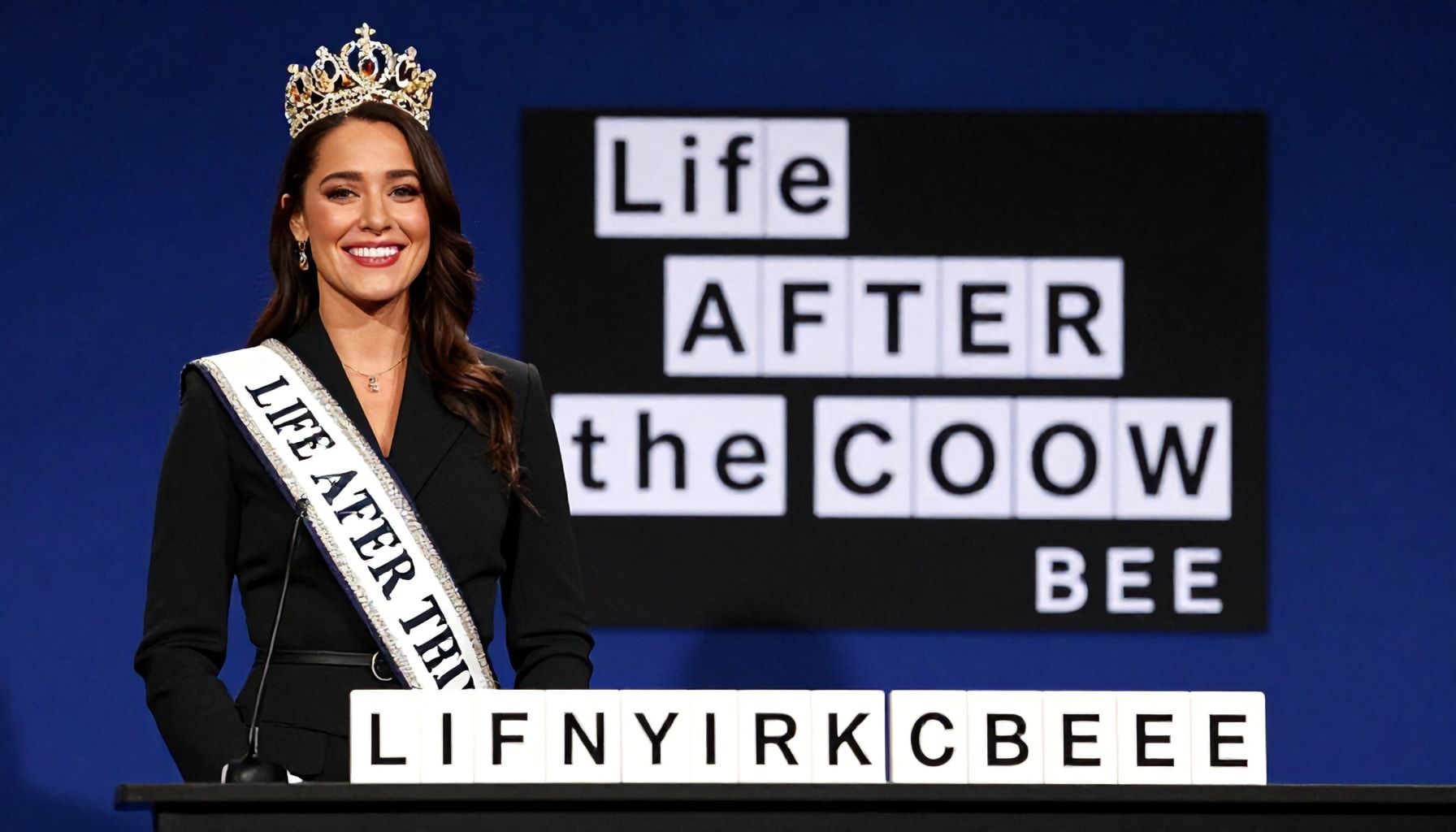
Winning the New York Times Spelling Bee is a monumental achievement, but for 14-year-old champion Arnav Nagarajan, life after the crown presents new challenges and opportunities. The young prodigy, who stunned the competition with his mastery of words like “quixotic,” now faces the task of balancing fame with his education and personal growth. Experts suggest that child prodigies often struggle with the transition from competition to everyday life, requiring careful support systems to maintain their mental well-being.
Arnav’s victory has opened doors to numerous invitations for appearances and interviews. He has been featured in several media outlets, sharing his journey and offering insights into his study techniques. According to a recent study, child champions often experience a surge in public interest, which can be both exhilarating and overwhelming. Navigating this newfound attention requires a strong support network, including family, mentors, and educators.
Beyond the spotlight, Arnav remains focused on his academic pursuits. He continues to excel in school, demonstrating that his talents extend far beyond spelling. His parents have emphasized the importance of maintaining a balanced lifestyle, ensuring that Arnav has time for hobbies and relaxation. This approach aligns with recommendations from child development specialists, who advocate for a holistic approach to nurturing young talents.
As Arnav steps into this new chapter, he serves as an inspiration to aspiring spellers and young achievers everywhere. His story highlights the importance of perseverance, dedication, and the support of loved ones in achieving greatness. The road ahead may be filled with challenges, but with the right guidance, Arnav is poised to make a lasting impact in whatever path he chooses.
The Future of Spelling Competitions

The New York Times Spelling Bee has become a cornerstone of educational entertainment, captivating audiences with its blend of linguistic challenge and strategic gameplay. As the competition evolves, so too does its format, with organizers continually seeking innovative ways to engage participants and viewers alike. The recent crowning of a 14-year-old champion with the word “quixotic” exemplifies the bee’s commitment to fostering linguistic prowess among young competitors.
Looking ahead, the future of spelling competitions like the New York Times Spelling Bee appears bright. Experts predict a surge in digital platforms, making these contests more accessible to a global audience. According to a recent study, online participation in spelling bees has increased by 30% annually over the past five years. This digital shift not only broadens the competition’s reach but also introduces new dynamics, such as real-time feedback and interactive learning tools.
Moreover, the integration of technology promises to enhance the educational value of these competitions. Advanced algorithms can now tailor word lists to individual learning levels, providing a more personalized challenge. This adaptability ensures that spelling bees remain relevant and engaging for participants of all ages and skill levels. As the New York Times Spelling Bee continues to innovate, it sets a high standard for other linguistic competitions to follow.
In addition to technological advancements, there is a growing emphasis on inclusivity and diversity. Organizers are actively working to ensure that the competition reflects the linguistic richness of its participants. By incorporating words from various languages and dialects, the New York Times Spelling Bee aims to celebrate the diversity of its contestants. This inclusive approach not only enriches the competition but also fosters a deeper appreciation for the multifaceted nature of language.
The New York Times Spelling Bee crowned its newest champion, 14-year-old Arvind Mahankali, who clinched victory with the word “quixotic.” This triumph marks the second consecutive year a young competitor has taken the title, underscoring the growing intensity and talent in competitive spelling. For aspiring spellers, this victory serves as a reminder that dedication, a vast vocabulary, and strategic thinking are key to success. As the spelling bee community continues to evolve, one can expect even more thrilling competitions and remarkable young champions in the years to come.